
Doing It Right Is Not a Consent Strategy

Updated: 3 days ago
Commentary on "'Use your brain': Hundreds march in Vancouver against AI data centre expansion" · Vancouver Sun
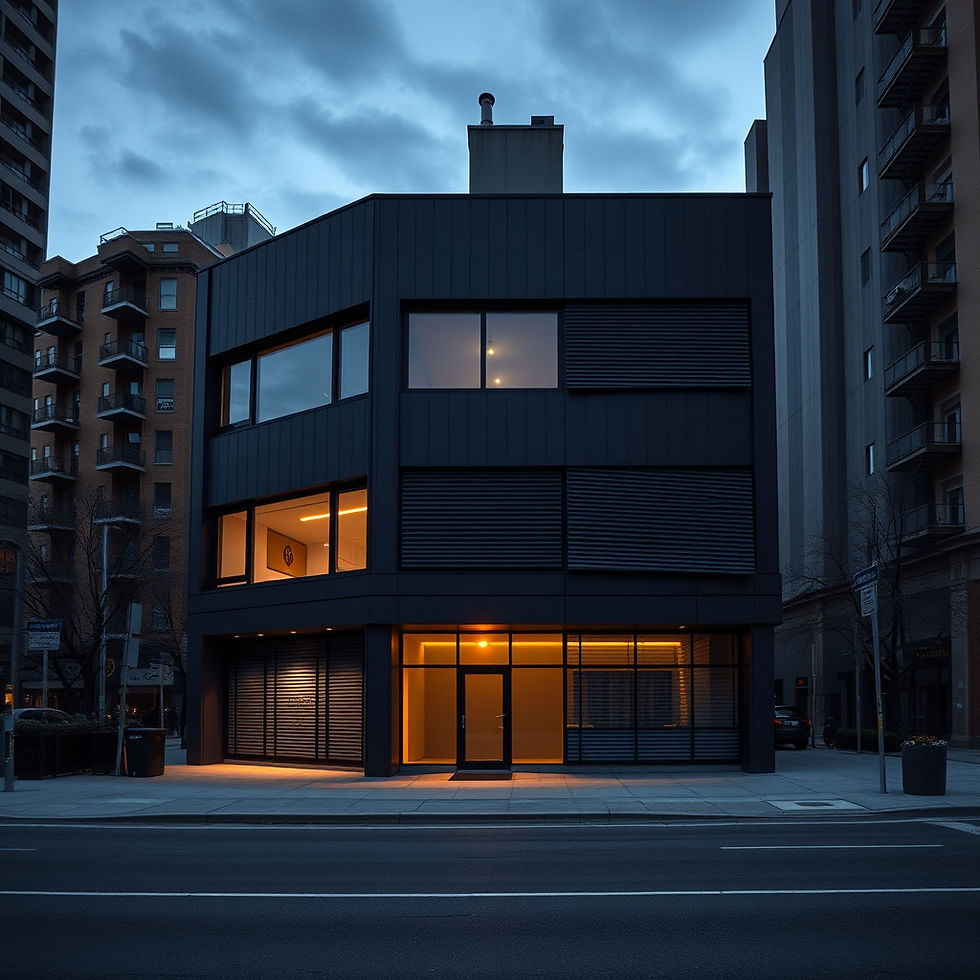
If technical virtue produced public acceptance, the Vancouver projects would be the easiest approvals in the country. They are not. They may be the hardest, and the reasons are worth sitting with rather than explaining away.
Telus and Westbank are proposing two AI data centres in Vancouver under Ottawa's sovereign AI data centre initiative, with provincial support. The first converts a 1977 office building in Mount Pleasant that housed Hootsuite for a decade, roughly 26 megawatts, opening late this year. The second is a purpose-built facility beside BC Place, up to 100 megawatts, built above and integrating with an existing downtown steam plant, targeted for 2029. Across the three-site British Columbia network, more than 60,000 GPUs and over 150 megawatts by 2032.
The environmental specification is close to best in class. Ninety-eight per cent clean hydroelectric supply. Ninety per cent less water than a conventional facility. Waste heat captured and fed into two district energy systems rather than exhausted, enough, on the company's figures, to heat the equivalent of 150,000 homes. Telus describes it as using every electron twice, and calls the network a critical national asset, "for Canadians, by Canadians".
Three protest marches since May. A petition past 17,000 signatures. A council that scheduled a public hearing and then unanimously unscheduled it.
Every box, checked
It is worth being precise about how well this project scores against the criteria this industry has been telling itself matter. It does not compete with households for scarce generation, because British Columbia's supply is hydroelectric. It largely does not consume municipal water. It is a brownfield conversion in one case rather than new construction. It recovers heat at civic scale into infrastructure that already exists. It is Canadian-owned, federally partnered, and explicitly framed around keeping Canadian data under Canadian law.
That is the model, more or less as the sector has been describing it. And it drew hundreds into the street in May, again in June, again last weekend, and produced an organized campaign that is now shaping a municipal election.
The straightforward conclusion is that the industry has been mistaking an engineering answer for a political one.
The heat recovery is why it is downtown
Read the objections and they are not primarily about water, despite Metro Vancouver having been under Stage 3 restrictions through the debate. One organizer's argument is that the facilities are, in his phrase, "dead weight to a city": fewer jobs than the same land would support as office space, less foot traffic for surrounding businesses, pressure on the grid, and public money going to a project whose returns accrue to its investors. Speakers at council asked for housing and durable employment rather than construction jobs. And the placard the Sun put in its headline is not an argument about megawatts at all. It is an argument about AI. Engineering cannot answer it, and pretending otherwise wastes everyone's time.
The land-use argument is the one with real traction. These buildings occupy prime urban land in a city with an acute shortage of it, and they employ very few people once running.
Here is the part that deserves more attention than it has received. The waste heat recovery, which is the project's strongest environmental credential, is only possible because the facilities sit inside a city. Heat has to go somewhere, and district energy networks are urban infrastructure. The mechanism is the closed-loop liquid cooling that also produces the water savings, the same shift the chip vendors are now marketing, arriving here as a working installation rather than a claim. But the virtue and the siting are one decision. An operator cannot feed a neighbourhood energy utility from a remote site, and cannot avoid urban land-use conflict by locating downtown. The industry has been treating these as separate variables to be optimized independently. In Vancouver they are the same variable, and choosing the environmental optimum chose the political maximum along with it.
That is a genuine tension and nobody has resolved it. It is a better argument than either side is currently making.
Sovereign is an argument for Ottawa, not for the neighbours
The federal minister frames the initiative as expanding Canada's sovereign compute capacity. That is a real and defensible national interest, and it is why the program exists.
It is also, demonstrably, not a consent argument. Nobody at a council meeting in Mount Pleasant is weighing their objection against the country's jurisdictional exposure on foreign cloud infrastructure. Sovereignty answers a question a federal department is asking. The neighbours are asking a different one, which is what this building does for the twelve blocks around it. Deploying the first answer to the second question reads as evasion, and it has been read that way.
This is worth other operators absorbing, including those of us who find the sovereignty case persuasive. It earns federal support. It does not earn local acceptance, and treating it as though it does is how a well-designed project ends up in front of a crowd on a Saturday afternoon.
The standard was proposed and voted down
The most instructive event in the sequence got the least coverage. A city councillor moved to pause large new data centres until Vancouver had a framework to assess them, including a requirement that applicants commission independent assessment of water, emissions, air contaminants, noise and heat, mitigation, and employment effects before rezoning or permitting. That is a disclosure standard. It is roughly what this sector should want, because it lets a good project prove itself on the record.
It was defeated seven to three.
Days later, the same council referred a rezoning to public hearing and then rescinded its own referral, because so many people had registered to speak that the hearing could not be run in the time available. The decision now lands after the October municipal election.
Refusing the standard did not make the process faster. It moved the same argument into a worse venue on a longer timeline and turned a permitting question into a campaign.
The lesson is not that Telus built the wrong thing. On the available evidence they have built close to the right thing. It is that the sector has been treating engineering quality as a substitute for a consent strategy, and it is not one. Consent requires showing up earlier, locally, with specifics, and with something the surrounding community actually receives.
Heat into a district energy system warms the equivalent of 150,000 homes, which is an impressive number and, as presented, an environmental credential rather than a benefit anyone can point to on a bill. Those are not the same thing, and the difference is the whole argument.
VOLTEDGE
Reference: "'Use your brain': Hundreds march in Vancouver against AI data centre expansion" · Vancouver Sun · read the article


Comments