
Solved, Within the Fence Line

Updated: 3 days ago
Commentary on "Nvidia says AI's water challenge is largely solved" · Axios
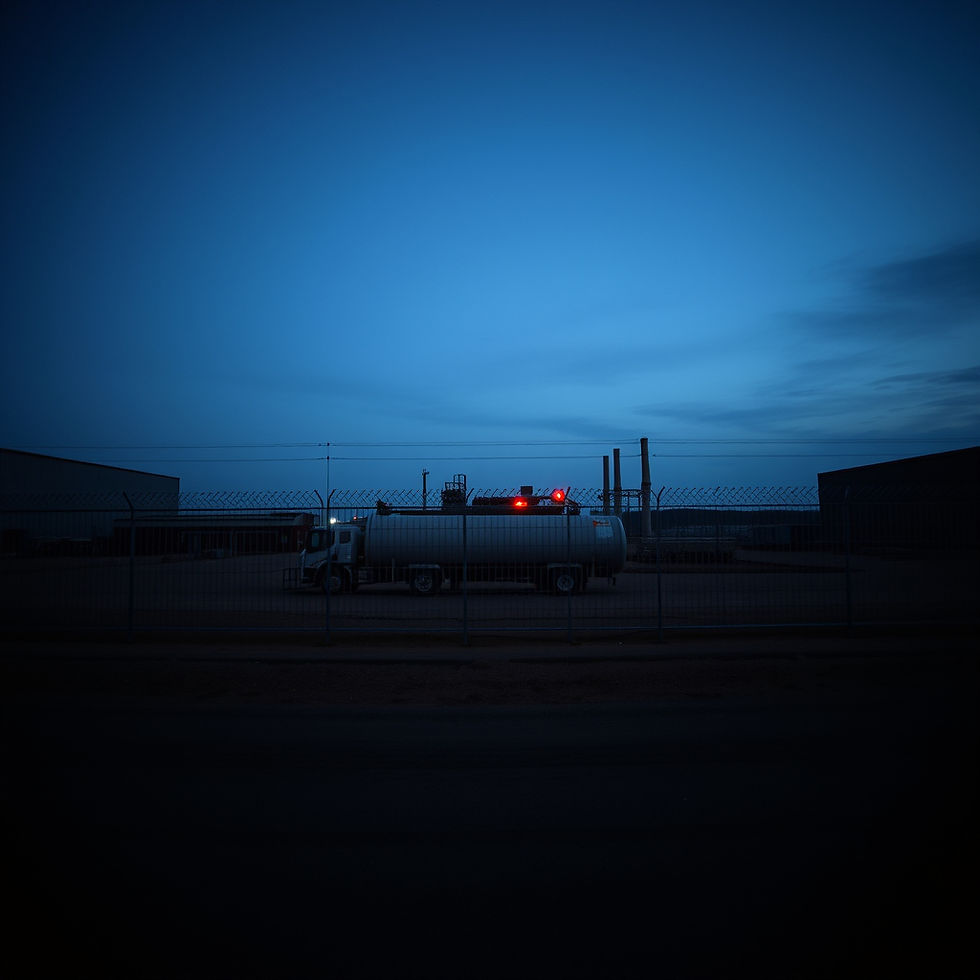
Engineering claims and accounting claims look identical when they are written down. The difference is where the boundary sits, and the boundary is almost never in the sentence.
Axios reports that Nvidia's chief sustainability officer, Josh Parker, told the publication ahead of London Climate Week that "The water consumption challenge for data centers is largely solved". The basis for the claim is real engineering. The company's latest system is cooled entirely by a recirculated mixture of water and propylene glycol, chemically close to automotive antifreeze, which runs at 45 degrees Celsius. Because the loop tolerates that temperature, a facility can lean far less on mechanical chilling, or in many climates dispense with it. Microsoft's vice-president of data centre engineering, asked about the possibility before he knew of the announcement, said it could remove the need for mechanical chillers in most climates most of the time, including Arizona.
That is a significant advance and it deserves to be reported as one. The claim built on top of it is doing something different.
What the claim actually covers
The sentence is true if the system boundary is the building envelope. Inside that boundary, a closed loop that rejects heat at 45 degrees genuinely does eliminate most of what evaporative cooling was there to do, and on-site consumption falls toward zero.
Axios notes, in a single line, that producing the electricity to run the facility can itself require substantial water depending on the generation source. That line is the whole argument. It is not a footnote to the claim, it is the larger half of the number, and it sits one metre outside the fence.
Nvidia has not made the water disappear. It has moved it upstream, from a meter the operator reads to a meter somebody else reads, and announced the move as a solution. That is not dishonest. Within its stated scope it is accurate. It is simply an accounting result presented in the grammar of an engineering result, and the distinction will be lost on every audience the claim will now be repeated to.
The water follows the electricity
Once cooling water is off the site, the facility's water footprint is determined almost entirely by its generation mix. Hydroelectric, wind, and solar supply carry negligible operational water intensity. Thermal generation cooled by evaporation carries a great deal. The same building, running the same chips, has a water footprint that varies by an order of magnitude depending on what is at the other end of the wire, and nothing about the chip announcement touches that variable.
Consider the Alberta case reported earlier this month. A 932 megawatt gas-fired station has been sanctioned northeast of Edmonton to serve a single unnamed data centre customer. If that facility adopts systems of the kind Nvidia is describing, it will be able to state truthfully that it consumes almost no water on site. Whether its power consumes water depends on how the generating station rejects its own heat, and that is not in the announcement, is not in the customer's eventual sustainability disclosure, and is not something a nearby resident has any practical way to find out.
This is the mechanism by which a genuine efficiency gain becomes an obstacle to public understanding. The operator's number improves. The system's number may not. And the operator now has a defensible sentence to say at the council meeting.
A chip announcement that is really a building announcement
The second thing the claim understates is what adoption requires. A 45 degree direct-to-chip loop cannot be installed into a hall built for air. The plumbing, the heat rejection path, the floor loading, and the electrical distribution are all different. Axios notes that the systems will take years to propagate and that many existing facilities will keep running older cooling, that Nvidia declined to discuss costs, and that adoption will turn on the economics of purpose-built liquid-cooled design.
Read plainly, this is a capital obsolescence announcement wearing sustainability framing. It splits the industry into facilities designed for this from the foundation and facilities that will spend their remaining life explaining why they were not. The advantage accrues to whoever is building now, to a specification that does not yet have an installed base to defend.
There is a further consequence that has had almost no attention. Heat rejected at 45 degrees is heat at a temperature that is actually worth something. For most of the industry's history, waste heat was too cold to use and the only question was how cheaply it could be thrown away. Warm-water cooling changes the category. Whether anything is done with it is a design decision and a siting decision, not a chip decision.
Efficiency is not a substitute for disclosure
Axios closes on the rebound problem, and is right to. Parker is explicit that efficiency gains are intended to support growth, and that AI workloads are not getting lighter. Efficiency per unit of compute has never been a reliable guide to total consumption in any industry, and there is no reason this one will be the exception.
But the more immediate effect is on the argument communities are currently having. Water was the most legible objection available to a municipal council, because a withdrawal permit is a number anyone can read. That objection is about to be answered, correctly, by a large number of operators, and it will stop distinguishing good projects from bad ones.
What replaces it has to be a disclosure standard that follows the resource rather than the fence line. Where the electricity comes from, how that generation is cooled, what happens to the rejected heat, and what the facility does to the grid at the moment of peak. Those questions survive the announcement. The water question, as currently asked, does not.
Nvidia has solved a real problem and drawn a small boundary around it. The useful response is to widen the boundary, not to dispute the engineering.
VOLTEDGE
Reference: "Nvidia says AI's water challenge is largely solved" · Axios · read the article


Comments