
Sovereignty Is Now a Supply Chain

Updated: 3 days ago
Commentary on “Cohere, Aleph Alpha combine to target enterprise AI market” · Reuters
Most of the coverage reads this as two second-tier labs merging to survive against OpenAI. That reading is not wrong, and it misses what the deal actually establishes.
Canada's Cohere and Germany's Aleph Alpha have signed a definitive agreement to combine, operating as Cohere with headquarters in Toronto and Berlin. The combination was valued at around $20 billion when it was first disclosed in April. The merged company will employ more than a thousand people. Cohere reported roughly $240 million in annual recurring revenue last year; Aleph Alpha reported less than €1 million in 2023. Germany's Schwarz Group, the retail conglomerate behind the STACKIT sovereign cloud, is investing €500 million in the combined entity and, separately, €11 to €13 billion in a German data-centre campus built to house up to 100,000 AI chips. Cohere's chief executive, Aidan Gomez, put the logic plainly: the aim is to give governments and enterprises AI capable enough to compete with, and controllable enough to trust.
Set aside the revenue asymmetry, which is its own story. The thing worth noticing is the shape of what was assembled.
The pitch is control, not capability
The frontier labs compete on the benchmark. This venture is competing on governability.
Cohere's models are built to run inside a customer's own environment rather than as a service reached over someone else's API. Paired with a sovereign cloud and a dedicated data-centre build, that becomes a single proposition aimed squarely at buyers for whom control is not a preference but a regulatory condition: defence, finance, healthcare, energy, and the public sector.
Whether that is a durable position is the real question, and it is not obvious. Capability gaps tend to close. A frontier model is a moving target, and a sovereign alternative that is eighteen months behind on raw performance has to keep justifying the trade. But for a central bank or a ministry, a slightly less capable system they can run inside their own walls may simply beat a more capable one they are not allowed to use. The bet is that for a large enough class of customers, governability is the feature that clears procurement.
Sovereignty used to be a setting. Now it is a stack.
Until recently, "sovereign AI" mostly meant two claims: the data stays in the country, and the vendor is domestically owned. This series has argued before that ownership is not a security control, and that data residency is a weaker guarantee than it sounds.
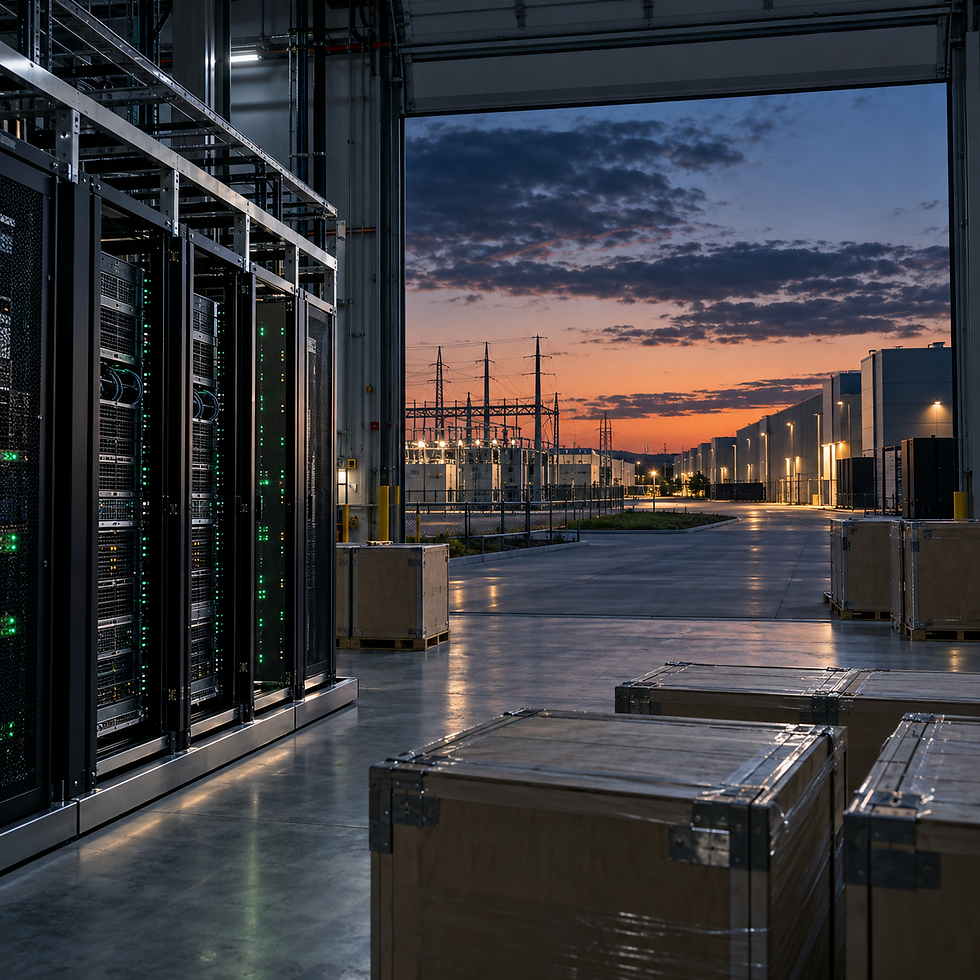
This deal is the first time the term has been expressed as a vertically integrated supply chain rather than a label. Model weights, a sovereign cloud to serve them, and a data centre to run them, assembled and sold together. The €11 to €13 billion earmarked for the compute campus is the part that makes the word mean something. A model you are permitted to run on your own premises is not sovereign if the only place to train and serve it at scale sits inside a US hyperscaler.
That is the reframe. Sovereignty is not a property of the model. It is a property of the whole stack, and it closes at the infrastructure layer or it does not close at all.
Which is why the compute is the tell
The most important number in the announcement is not the valuation. It is the data-centre spend.
Two model companies merging is a corporate event. Two model companies merging onto a dedicated sovereign compute base is a structural one, because it concedes the point the model layer has spent three years avoiding: without controlled infrastructure underneath it, a sovereign model has moved its dependency, not removed it. The chips, the cloud, and the campus are what convert a governance promise into something a regulator can actually inspect.
The Canadian read
There is a detail worth sitting with. Canada's most valuable AI company has just defined its future around sovereignty and control, and anchored the compute for it in Germany.
That is a defensible commercial decision. Schwarz brought the capital, the sovereign cloud, and the data-centre build, and those are exactly the pieces a model company cannot conjure on its own. But it is worth Canadians noticing that the sovereign-AI stack being built for the transatlantic enterprise market will, in this structure, run on European infrastructure. The model layer can carry a Canadian flag. The compute layer, in this deal, does not.
If sovereignty is now a supply chain, the question for any country that wants a real position in it is not whether it has a model company. It is which links of that chain it actually owns. The weights are the visible part. The compute is where the sovereignty is decided.
What this means going forward
The merger will be judged, correctly, on whether it can convert a governance pitch into enterprise revenue against much larger competitors. That verdict will take years.
The definitional shift is already here, and it does not depend on whether this particular company succeeds. Sovereign AI has stopped being a claim about where data sits and become a claim about who owns the stack it runs on, priced and for sale. And most of that price, it turns out, is the data centre.
VOLTEDGE
Reference: “Cohere, Aleph Alpha combine to target enterprise AI market” · Reuters · read the article


Comments