
The Load Is Landing in the Wrong Place

Updated: 3 days ago
Commentary on "AI data centres are popping up in the Toronto area. Experts say electricity prices could rise as a result" · Toronto Star
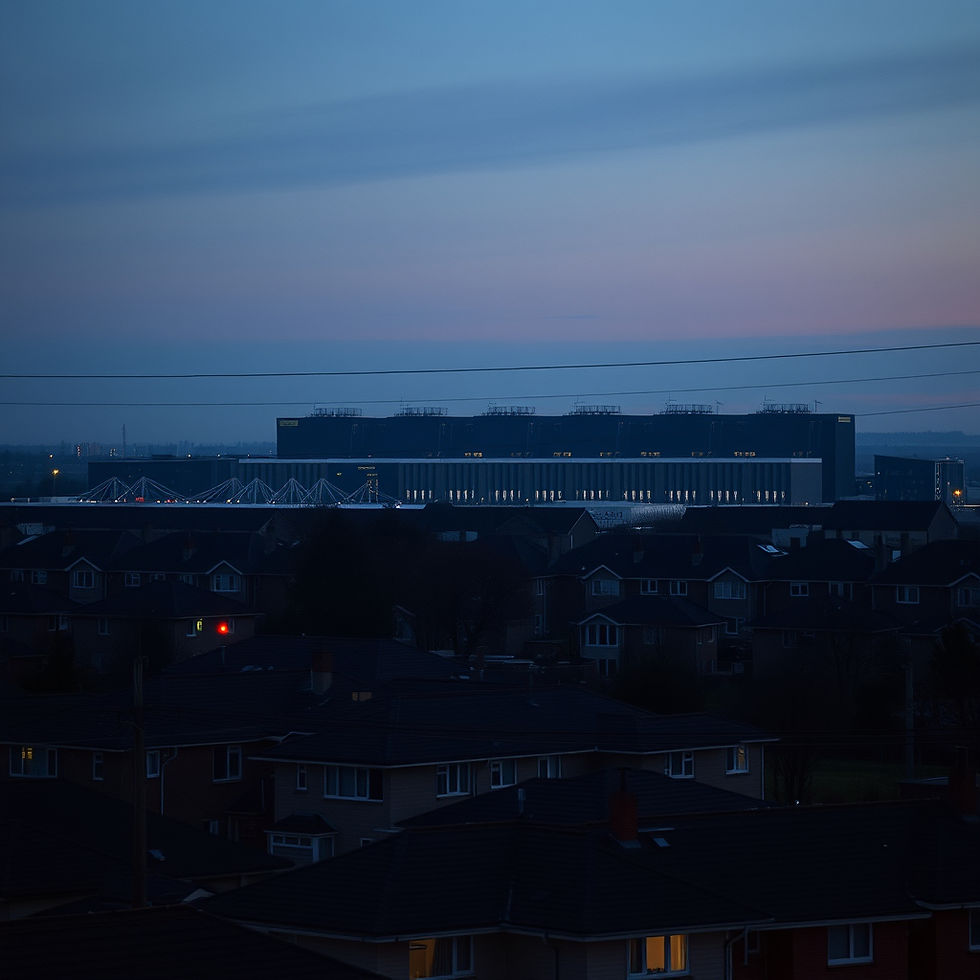
The headline blames AI for higher power bills. That is the wrong defendant. The bills are rising because of where the load is being put, and that was a decision someone made.
The Toronto Star reports a wave of AI data centres appearing across the Toronto region, often with little public consultation, and experts expect the strain on the grid to push electricity prices up. Local officials quoted in the piece worry that too little thought has gone into the pressure these buildings put on power and water. It is a familiar story, and not only here. From northern Virginia to Baltimore, residents near new data centres have watched their bills climb as facilities come online.
The instinct is to read this as a story about AI's appetite for energy. Read more carefully, it is a story about geography.
A placement failure, not a volume one
The strain the Star describes is not created by artificial intelligence in the abstract. It is created by concentrating enormous, around-the-clock loads on the one grid least able to absorb them: the dense urban system that households, hospitals and transit already depend on.
Nobody can yet size what is coming. Ontario's system operator forecast 60 per cent demand growth by 2050 in its 2024 outlook, raised that to 75 per cent in 2025, and brought it back to roughly 65 per cent in 2026. Planners are revising in both directions. That uncertainty is the point. When new demand of this size lands on a mature metropolitan grid, someone pays for the generation and transmission needed to serve it, and the bill arrives long before the forecast settles. Increasingly, that someone is the residential ratepayer.
One researcher the Star quotes pushes back on the simple version. Data centres account for roughly a tenth of Ontario's projected load growth over the next two decades, less than electric vehicles. His concern is competition: as new generation gets harder to build, the fight for existing electricity is what moves prices. That is the more precise version of the problem, and it makes the siting question sharper, not softer. A load that is only a tenth of the growth but lands almost entirely on the most congested part of the system is a placement failure, not a volume one.
Provincial policy is tilting the field further. Measures that give the province more discretion to connect large new loads, with economic growth as the priority, can end up favouring hyperscale facilities over the neighbourhoods beside them. The result is a competition for kilowatts that ordinary consumers did not sign up for and cannot win.
Where is a choice
None of this is an argument against building AI capacity in Canada, or against every facility in a city. Some workloads genuinely need metropolitan proximity, and an urban project that funds its own connection is a different proposition from one that does not. The question is not whether to build. It is where, and on what terms.
Metro clustering is a habit, not a law of physics. Data centres gravitate to big cities for fibre, power and workforce. But the AI workloads driving today's demand are not latency-bound the way consumer streaming is. Training and much of inference can run where power and cooling are abundant, not where real estate is most expensive and the grid most congested.
That opens a different design space. Site major loads where clean generation is available without bidding against households. Build efficiency into the foundation instead of retrofitting it. Capture and reuse waste heat instead of exhausting it. Treat underused energy infrastructure as an asset. A facility built this way relieves a strained grid instead of adding to it, and brings economic activity to regions that need it.
The ownership question the ratepayer debate misses
The electricity-price argument skips one thing. Much of the cloud capacity Canadian institutions rely on sits on foreign-owned infrastructure, subject to foreign law. The next generation of AI data centres is a rare chance to build capacity that is Canadian-owned, Canadian-operated and answerable to Canadian rules. Getting the where and how right is not only about power bills. It is about who controls the infrastructure the country will run on.
Steer the build-out, don't slow it
The Star is right to raise the alarm, and right to insist on consultation, environmental scrutiny and an honest accounting of grid costs. The conclusion is not that Canada should slow its AI build-out. It is that the build-out should be steered: away from the grids that can least afford it, toward designs and locations that make the load lighter to carry. Good design will not earn public acceptance on its own. It is the precondition for asking.
The winners of the next decade will not be the operators with the most compute. They will be the ones who solve power and place together. The demand is coming either way. Where it lands is still a decision.
VOLTEDGE
Reference: "AI data centres are popping up in the Toronto area. Experts say electricity prices could rise as a result" · Toronto Star · read the article


Comments